Collagen supplements have changed my hair, skin and nail health. Collagen has also radically transformed my entire family’s joint health and battle against chronic pain and rheumatoid arthritis. This article details the research behind collagen supplements (including the hype behind liquid collagen and vegan collagen) and my journey taking collagen every day for a month.

Collagen products have been picking up popularity in recent years. Magazines, beauty experts, and celebrities have raved about the benefits of collagen for its supposed cosmetic properties (Jennifer Aniston reportedly accredits it to her ever-youthful glow while Kourtney Kardashian has praised its overall skin and health benefits).
Could collagen supplements really live up to the all the hype they’ve been generating? I decided to find out.
At the time, I was doing it to explore the cosmetic benefits. But I had no idea how collagen it would transform way more than just my nails, hair and skin. Here’s what happened when I tried taking collagen supplements every day for a month.
Disclosure: Some of the links below are affiliate links. At no additional cost to you, I will earn a small commission if you click through and make a purchase. I only recommend products I have tried or believe would be beneficial. All opinions in my product reviews are my own honest thoughts. Utilizing affiliate links is one of the ways I support my work to keep delivering great content on my blog.
Jump ahead to:
What is collagen and why does it matter?
Collagen is the most abundant protein in the human body, making up about a third of your protein composition.
The word collagen itself is derived from the Greek word for glue (“kólla”) because it is like the glue that holds everything together. Which is fairly appropriate, considering collagen plays a pivotal role in everything from bones, muscles, skin, tendons and ligaments to your eyes, teeth and blood vessels.
Because of the important role collagen plays in the body, a lack of collagen (or collagen deficiency) can have a significantly negative impact on the human body.
Causes and signs of collagen deficiency
Our bodies naturally produce collagen, but that production begins to decrease as we age. Other factors, like too much of sugar and refined carbohydrates, smoking and ultraviolet radiation (sunburn), can also hinder your ability to produce collagen. That lack of collagen can manifest in different ways over time.
In more simple cases of collagen deficiency, you might notice some of the following signs in your skin health:
- Wrinkles
- Sagging or loss of elasticity
- A higher propensity for scaring
Soreness from weakened cartilage can also develop in the joints, contributing to higher levels of joint pain or sensitivity. In more serious cases of collagen deficiency (like hereditary collagen disease or autoimmune collagen vascular disease), your joints, skin, blood vessels and other vital organs can be quite seriously compromised.
Can you increase collagen levels?
Yes, you absolutely can. And it’s actually quite simple to do. You can naturally increase your collagen levels by consuming collagen-rich foods and supplements.
Collagen is found naturally in the connective tissue of animal-based foods. Consuming things like chicken and pork skin, bone broth and gelatin may help increase your collagen levels (although there’s some disagreement about which one is the best for truly increasing your collagen levels). Another easy option is to take either a gelatin or hydrolyzed collagen supplement.
Are collagen supplements safe?
Yes! There aren’t any substantial reports or reviews of collagen supplements that show them posing serious safety risks or side effects. Many collagen supplements are also dairy and gluten-free.
Like with all foods, there is always a chance that someone may be allergic to an ingredient. Be sure to always read over ingredient lists and consult with your doctor before consuming a new supplement.
The benefits of taking collagen supplements
Many people hear “collagen” and automatically think of the anti-aging benefits of improving skin elasticity and decreasing wrinkles. (Research has demonstrated that both oral and topical collagen supplements can positively impact skin health and facial lines.) But the benefits of collagen may extend far beyond just the cosmetic realm.
Because of the role collagen plays in bones, tendons, and ligaments it also plays a role in the health and condition of our joints as we age.
In one study, examining the effect of collagen supplements in cases of osteoarthritis, subjects suffering from osteoarthritis were given collagen supplements over the course of 70 days. At the end of the study, participants taking the supplement reported a significant decrease in pain. Collagen supplements may be beneficial in both preventative and reactive arthritis care and long-term joint and bone preservation.
Collagen is also present throughout the gut in connective tissue. It has been studied for medical benefits in cases of leaky gut syndrome and inflammatory bowel disease and some research indicates it may have restorative properties for healing the inner lining of the stomach.
Since collagen is a vital protein in the human body, it has also been studied for its potential in increasing muscle mass. One study found collagen supplements successfully helped to increase muscle mass in elderly men with Sarcopenia (a degenerative loss of skeletal muscle mass) in combination with resistance training.
Is there vegan collagen?
Believe it or not, yes. While the majority of collagen supplements are derivative from animal sources (like beef and fish), there is such a thing as vegan collagen. Vegan collagen supplements are derived from genetically engineered yeast and bacteria.
There is some disagreement about the effectiveness of vegan collagen compared to animal-based collagen. By and large, the majority of scientific research on the benefits of collagen have been done using animal-based collagen sources. Of course, this may also be due to the fact animal-based collagen supplements have been around to study longer.
Vegan collagen is relatively new on the supplement market and hasn’t always been as readily accessible as animal-based collagen supplements. But it’s safe to consume and seems to be showing some real promise as a viable plant-based collagen option.
Vegan collagen powders:
- PlantFusion Plant Based Collagen Peptides – Unflavored
- PlantFusion Plant Based Collagen Peptides – Strawberry Lemonade
- Vitauthority Plant Based Collagen Powder
- Sunwarrior Vegan Collagen Peptides


I’m not a vegan and I personally haven’t tested out any vegan collagen supplements (my experience in this article will be detailing my use of animal-based collagen products). But I did want to note that there are indeed vegan-friendly collagen options available now.
Which is better: Collagen pills, collagen powder or liquid collagen?

You can buy collagen supplements in multiple forms, including powders, pills, tablets and even individually bottled liquid drinks. But which is the best option? Is liquid collagen better than powdered collagen or collagen capsules?
There are a lot of myths out there in the supplement world around the topic of which is better: Pills, powder or liquid collagen. Within the last few years, I’ve noticed a marketing trend of supplement companies (and bloggers commissioned by supplement companies to write reviews on liquid collagen) really pushing liquid collagen as “the best” form of collagen or “better absorbed” than other forms of collagen.
This is something that I actually used to believe, until I did some research. There is zero substantial research to back this claim up (and if someone tells you differently, you should ask them to cite their source).
Which is absorbed better by the body: Liquid collage, powder collagen or collagen pills?
You body can absorb collagen in numerous forms, including pills, tablets, powders and liquids. The rate of absorption time could possibly differ slightly based on the form you choose, but not significantly enough to say liquid collagen discredits the benefits from collagen in powder or capsule form.
Now, it is true that the speed of digestion/absorption may differ based on the supplement form (pill vs liquid). But probably not enough to make much difference.
Pills and tablets must first be broken down and dissolved by the stomach before the body is able to assimilate the nutrients (which could possibly take 20-30 minutes, depending on individual stomach acidity and gut health). Supplements that can be taken in liquid form may help speed up accessibility to nutrients (since there’s less work to be done in “breaking it down”).
But that doesn’t mean your body is less likely to benefit from the nutrients in a pill vs a liquid. 20 grams of collagen peptides is still 20 grams of collagen, whether it’s pill, liquid or powder. For the average person, a 20-30 minute difference in digestion and assimilation probably isn’t going to make that much difference (they’ll still benefit from the collagen supplement because they consumed a collagen supplement in the first place).
If it were true that your body was unable to absorb properties in pills vs liquids… It would seem like other scientifically driven communities (like the medical and pharmaceutical industries) would have caught on by now and stopped producing/prescribing medications in pill form a long time ago.
I’m being a bit cheeky here, of course, for the sake of example. But my main point is that if someone is trying to sell you something (like liquid collagen vs powdered collagen), it’s always worth asking why.
The main reason (in my opinion, anyway) that supplement companies would want to push liquid collagen so hard is because they can make more money from it than pills or powders. A single-serve bottled collagen drink can cost $12, which could cost $360 per month to sustain as a daily supplement habit (about $4,320 annually). A 30-serving container of collagen powder can cost $40 (costing closer $480 annually).
At the end of the day, the type of form you consume collagen supplements in is mainly going to depend on your personal preferences and budget.
Why I Prefer Powdered Collagen
Personally, I use powdered collagen because it’s cost effective and I find it to be a more enjoyable consumption experience. In general, I’ve found supplements in capsule form (particularly collagen and other amino acid capsules) can be a rather unpleasant experience. Here’s why.
The gelatin outer coatings have a tendency to “stick”. Someone gave me a bottle of these supplement capsules once (in hindsight I can see why they didn’t want them) and each time I took one it stuck to the back of my throat (even taking them with water or eating a snack after to try to get it unstuck). After 20 or so minutes, the capsule coating would dissolve and generate a mini-powder burst that had me coughing up gross tasting supplement powder.
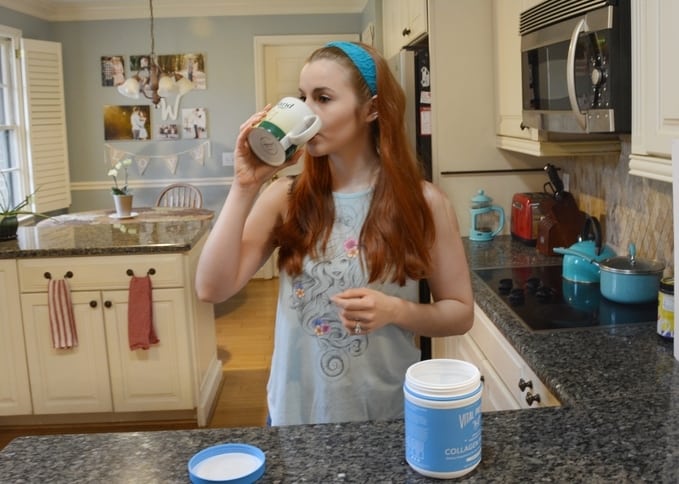
I just pour a scoop of collagen powder into my coffee in the morning and I’m on my way. I also like that from an environmental standpoint, I’m creating less waste as a consumer with one monthly container of collagen vs 30 single use plastic bottles of liquid collagen.
Is Drinking Collagen in Hot Liquids Bad?

I recently received a question from a reader who asked the question: Is drinking collagen in coffee bad?
There is a degree of speculation in the online supplement community on whether or not the temperature you drink collagen supplements can impact their effectiveness. The general idea behind this rumor is that you shouldn’t drink collagen in hot coffee or hot liquids because it will “break down or damage” the collagen peptides.
But is that what the actual research indicates?
Many studies have been conducted on collagen supplements, but not a ton that delve specifically into the benefits of consuming collagen in hot vs cold liquids.
So without a ton of data to compare, much of the conversation on this topic is conjecture. There aren’t enough definitive studies that specifically test based on temperature that someone could point to and say “ah-ha! This proves it’s bad to drink collagen in hot coffee!”
But we can look at some of the research around how collagen supplements are made and their potential bioavailability (i.e. the extent that a nutrient can be used by the body).
It’s true that proteins on a molecular level are complex (so complex that certain elements of how exactly amino acids function are still not fully understood by the scientific community) and sensitive to changes in their environment. But understanding how collagen peptide supplements are created can help give us some additional perspective.
Most collagen peptide supplements are created by a process of hydrolyzation (aka breaking down collagen protein, or amino acids, into smaller, more easily digestible units for human consumption) that involves denaturing and digesting the collagen protein.
There have been studies that suggest hydrolyzed collagen may be more bioavailable than non-enzymatically hydrolyzed collagen. In plain ol’ English, that means you may have a better chance to absorb more nutrients from a hydrolyzed collagen peptides supplement vs eating cow hide or cow bones.

On a molecular level, collagen proteins aren’t going to function exactly how they would have prior to going through this process, but that’s not necessarily a bad thing. After all, if not for this hydrolyzation process, the collagen proteins wouldn’t have been as easy for humans to digest in the first place.
Because many collagen supplements have already been denatured and hydrolyzed, whether or not they’re dissolved in a hot liquid really shouldn’t matter or greatly hinder their bioavailability (i.e. your hot water probably isn’t doing that much to impress those amino acids on molecular level, dude).
There have also been studies that look at benefits experienced from consuming collagen that happened to involve drinking it in hot liquid. One 2016 clinical study had participants consume a collagen supplement in a hot beverage for 8 weeks to measure benefits experienced in skin health (and those who consumed the collagen supplement showed significant benefits at the end of the study).
If hot liquids nullify the benefits of collagen peptide supplements, why have people still been experiencing benefits from consuming it in hot liquids?
So to summarize, it feels far-fetched to say drinking collagen in hot liquids “ruins” collagen when that’s simply not what the current research (or many people’s experience consuming collagen in hot liquids) seems to support. At the end of the day, there are benefits to be reaped whether your personal preference is consuming collagen peptides in hot or cold beverages.
How to avoid collagen clumps

I’d heard about collagen powders had a tendency to get clumpy sometimes when dissolving in liquid. That’s definitely true when it comes to cool or cold liquids. I found there are two best way to enjoy collagen in your drinks without getting clumps:
- Stir it into hot liquids
- Blend it into cool liquids
Collagen powder dissolves quickly and easily into hot liquids. I mainly mixed mine into hot drinks, like tea or coffee in the morning and never had an issue with clumping.
NutriBullet Personal Size Blender


But you can also enjoy collagen in cool, iced or frozen drinks. On days I was craving iced coffee or even mixed with a flavored water in the gym, I just whipped out my personal Nutribullet blender and blended my collagen into the cool liquid and then poured it into a glass over ice.
What types of collagen I use
I wanted to compare two different brands of collagen to see if there were any noticeable differences in flavor, texture, qualify or results. I tried one from Vital Proteins and one from BioOptimal.
Both brands were a hydrolyzed collagen supplement that were dairy and gluten-free, flavorless, odorless and made without artificial colors or additives. They were both derived from bovine hide collagen peptides and each packed 10 grams of collagen and 9 grams of protein per a one-scoop serving. I ordered both online through Amazon Prime (hello, free shipping).
1. Vital Proteins Collagen Peptides
Vital Proteins is known for a high standard of quality, as well as being compatible with a wide range of dietary preferences (Paleo, Keto, Whole30, dairy-free and gluten-free). It’s also allegedly the favorite brand of celebrities like Jennifer Aniston and Kourtney Kardashian.


At the time I ordered it, the containers came in three sizes, 5oz for $15.00, 10oz for $25 and 20oz for $43.00 (I ordered their 20oz container). The recommended serving size was two scoops for a total of 20 grams of collagen, but I found with one scoop with 10 grams a day was pretty sufficient for starting out. This also extended a one-month canister of collagen into a two month supply.


BioOptimal had good reviews for the quality of their products, so I decided to choose it as the second brand of collagen for testing. It rang in as the slightly cheaper of the two at just $19.99 for a 10.58oz containers of 30 servings.
How the Two Brands Compared
I actually really like both of these brands. My digestive system is really sensitive and neither one caused me any issues.
Initially I tested both the same day in both a hot drink and a room temperature drink to see how they blended and tasted. True to their promises, they really didn’t have any particular taste or odor. I also didn’t notice any significant difference in between the two in how they blended into liquids.
While I initially wrote this post after my first month utilizing collagen back in 2018, I continued using collagen on a long-term basis (keep reading to learn why). I used Vital Proteins for a month straight, then the following month BioOptimal to compare. I found that I experienced the same results on each type of collagen and give them each a solid thumbs up.
Overall, I would recommend buying collagen supplements online vs in stores if you’re budget-minded. In my experience, I’ve noticed the exact same brands in stores typically run $10-15 more expensive than online. Personally, I buy all of my supplements online to find the best deals.
My collagen experience

I initially became interested in collagen for some of the cosmetic benefits. Although not prone to acne, I’d struggled with constant breakouts over my forehead the prior 4-5 months. Also, in spite of up-keeping a very consistent hair care routine, I noticed a more fragile, brittle quality to my hair in the past two years.
But when I started researching collagen, I actually became more intrigued with some of the other benefits it had to offer. Increasing my overall skeletal muscle mass is one of my focuses in my weight training routine and (as I discussed in my bloating article) my digestive system has gone through some crazy changes recently that have forced me to majorly alter my diet.
Rheumatoid arthritis (RA) also runs strongly on the maternal side of my family. RA symptoms can begin manifesting as early as age 30 and three times as many women are impacted by the condition than men, according to the Arthritis Foundation. Given my genetic propensity and active line of work, preventative care for my joints is a big priority to me.
If collagen could possibly help heal or reinforce the lining of my stomach, complement my bodybuilding goals and keep my joints happy and healthy over time, I was willing to test it out!
How My Nail Health Changed on Collagen
The first thing that I noticed w

as a change in my nails. I’ve always had very bendy, flimsy fingernails that grow slowly and break constantly. (Which isn’t exactly a life crisis, but was the reason I wore fake nails a lot in high school.)
About two weeks in, I noticed that my nails were growing more quickly, taking on a sturdy quality and no longer breaking when I bumped into doorknobs or free weights at the gym. They were growing at twice their normal rate and holding up against daily wear and tear.
You might be wondering “who really knows things like their normal rate of nail growth?” This girl does. Like I said, growing up I really wanted long pretty nails.
In middle school, I actually kept track of their growth in the most scientific manner I knew possible: tracing my fingers out on a piece of notebook paper to compare outlines until they were at an optimal length for glitter polish. (Middle school was a crazy time for all of us, don’t judge me.) I’m telling you, this was the nail growth of my 6th-grade dreams.
How My Entire Family’s Joint Health Improved on Collagen

Christmas 2019 with my parents, maternal grandparents and all 4 of my siblings (my handsome hubby is standing behind me in the red flannel).
Like I mentioned earlier, rheumatoid arthritis (RA) runs very strongly in my family on my maternal side. My late grandfather grappled with RA and my mother was diagnosed with RA in her early 40s.
Scoliosis and vertebral subluxation also runs in my family through my maternal line, both of which I inherited.
As a personal trainer and group fitness instructor, I use my body a lot on a daily basis for a living. I was also an avid runner for eight years. Leading a very active lifestyle has had a lot of positive benefits for my health, but it has also definitely had an impact on my joints.
By my mid 20s, I found myself struggling with significant joint pain in my knees and ankles. And while I’m fortunate that my scoliosis is quite mild compared to many people (and has never required medical intervention or surgery), I’ve always struggled with chronic pain in my spine.
Since incorporating collagen supplements, I’ve noticed a significant decrease in joint pain and stiffness. I can also tell when I’ve been off collagen for a while, because that pain and stiffness return.
I’ve had such success with collagen that I actually recommended it both my mother and grandfather back in 2017. They began regularly incorporating collagen powder and both reported a huge difference in pain management with their battle with RA. In fact, throughout his late 80s and early 90s, my grandfather eventually swore by utilizing collagen to help manage pain from RA and OA (osteoarthritis). He drank it in his coffee daily until the very end in his 93 years of life.
My father also takes it now to manage chronic back pain. When I was a teenager in Ohio, my father broke his back one winter in a sledding accident. You wouldn’t guess it now but it was a devastating injury that nearly left him paralyzed. He began incorporating collagen in 2018, after hearing how much it had helped other family members manage chronic pain. It’s made a tremendous difference in his chronic back pain and he now regularly recommends it to anyone and everyone.
How My Hair Health Changed on Collagen

As a personal trainer, my hair is pulled back in braids or ponytails in gyms throughout the week, so my hair care routine is fairly low-maintenance. But for the sake of documenting the kinds of changes I saw, I’ll run you through my typical hair care routine.
My hair is super straight and for most of my life has been fairly non-fussy. In college, it was so rare for my hair to tangle that I just ran my fingers through my hair to even it out in the morning most day.
I’m not great with styling and am fairly lazy with my hair. I never use heated styling tools like straighteners, curling irons (because I’m lousy at it) or hairdryers (I let my hair air-dry).
I don’t use a ton of hair products, wash it 1-2 times a week and get highlights and a deep conditioning mask once a month. One of the issues I began noticing in my hair the past couple years before collagen was an increasing brittleness and an inclination for breaking and tangling. I added in a couple hair products (a leave-in spray conditioner and a hair serum) the year prior to try and boost my hair health, but to no avail.
During my collagen experiment, I decided not to change anything in my hair routine and just to see what happened.
I didn’t notice any major changes the first couple weeks. But by the third week, I noticed my hair was easier to brush and not tangling as much. By the fifth, I was able to start brushing it out with just my fingers again in the mornings. My hair was happier, healthier and not tangling, splitting or breaking as much anymore.
How My Skin Improved on Collagen

Screenshot from one of my FB Motivation Monday videos, makeup free.
I’ve always had a very consistent skincare routine and have never been prone to much acne. But in the last year or so before trying collagen, I’d noticed an increase in the number of breakouts.
Believe it or not, my breakouts actually got a bit worse the first couple weeks of taking collagen, causing me a slight panic. The collagen was the only thing I had changed in my routine and I wondered if I should call it quits.
But I remembered what my dermatologist in high school told me once when I visited for a similar series of breakouts. He told me when addressing acne, things tend to get worse before they get better because the treatment process would draw a lot of the impurities to the surface of my skin. He told me to trust the process and see it through, because it was ultimately better to deal with the root of the problem, not just mask the symptoms.
So I decided to stick it out and see if the same principle applied with taking collagen. One-by-one, as each blemish came to its worst point, it faded out into clear, even skin after. This happened over the course of about five weeks.
Now, I’m not trying to make any definitive claims that collagen supplements are some magical cure-all skin solution. But my forehead did clear up and now over two months later has remained clear since introducing a collagen supplement. And now over two years, it’s remained noticeably clearer since on collagen supplements than off. After that 4-5 months of perpetual forehead breakouts, it certainly seems to have made a positive difference for me.
Final Thoughts on Taking Collagen Supplements

Since I wrote this review on collagen back in 2018, I’ve continued to regularly incorporating collagen into my supplement routine. I can honestly say I don’t think I’ll ever go back to not consuming collagen powder on a daily basis.
Collagen has made a noticeable impact in my hair, skin and nail health. I can also notice the ways that collagen supplements have improved my joint health and the struggle with chronic joint and back pain for myself and numerous members of my family.
Do you use, or have you ever tried collagen (animal-based or plant-based)? I’d love to hear about your experience or favorite brands! Let me know about your own experiences in the comment section below!
Related posts on healthy living
- I Drank a Gallon of Water a Day for a Month
- How to Eat Chocolate Everyday for Big Benefits
- 10 Reasons Women Should be Lift Weights
- I Tried a 1-Day Juice Cleanse with Clean Juice
- How to Run (When You Suck at Running)
- 8 Ways to Eliminate Bloating
References:
1. Proksch, E, et al. “Oral Supplementation of Specific Collagen Peptides Has Beneficial Effects on Human Skin Physiology: a Double-Blind, Placebo-Controlled Study.” Skin Pharmacology and Physiology., U.S. National Library of Medicine, 14 Aug. 2013.
2. Trookman, Nathan S., et al. “Immediate and Long-Term Clinical Benefits of a Topical Treatment for Facial Lines and Wrinkles.” The Journal of Clinical and Aesthetic Dermatology, Matrix Medical Communications, Mar. 2009.
3. Schauss, A G, et al. “Effect of the Novel Low Molecular Weight Hydrolyzed Chicken Sternal Cartilage Extract, BioCell Collagen, on Improving Osteoarthritis-Related Symptoms: a Randomized, Double-Blind, Placebo-Controlled Trial.” Journal of Agricultural and Food Chemistry., U.S. National Library of Medicine, 25 Apr. 2012.
4. Zdzieblik, D, et al. “Collagen Peptide Supplementation in Combination with Resistance Training Improves Body Composition and Increases Muscle Strength in Elderly Sarcopenic Men: a Randomised Controlled Trial.” The British Journal of Nutrition., U.S. National Library of Medicine, 28 Oct. 2015.
5. Lawson, Michelle. “Collagen Deficiency.” Healthfully.com, Leaf Group, 05 December 2018.
6. Murrell, Daniel, MD. “Collagen Vascular Disease: Causes, Symptoms & Treatments.” Healthline , Healthline Media, 1 May 2017.
7. Jennings, Kerri-Ann, MS, RD. “Collagen – What Is It and What Is It Good For?” Healthline, Healthline Media, 5 May 2020.
8. Elliot, Brianna, RD. “6 Benefits of Taking Collagen Supplements” Healthline, Healthline Media, 19 Feb. 2020
9. Reisdorf, A. (2053, May 17). Can Collagen Be Vegan? Benefits, How to Get It, Diet Tips & More. Retrieved August 10, 2020
10. Clark KL;Sebastianelli W;Flechsenhar KR;Aukermann DF;Meza F;Millard RL;Deitch JR;Sherbondy PS;Albert A;. (2008, May 25). 24-Week study on the use of collagen hydrolysate as a dietary supplement in athletes with activity-related joint pain. Retrieved September 21, 2020.
11. Proksch E;Segger D;Degwert J;Schunck M;Zague V;Oesser S;. (2014, August 14). Oral supplementation of specific collagen peptides has beneficial effects on human skin physiology: A double-blind, placebo-controlled study. Retrieved September 21, 2020.
12. Avila Rodríguez MI;Rodríguez Barroso LG;Sánchez ML;. (2018, February 17). Collagen: A review on its sources and potential cosmetic applications. Retrieved September 21, 2020.
13. Skov K;Oxfeldt M;Thøgersen R;Hansen M;Bertram HC;. (2019, May 13). Enzymatic Hydrolysis of a Collagen Hydrolysate Enhances Postprandial Absorption Rate-A Randomized Controlled Trial. Retrieved January 27, 2021.
14. Ohara H;Matsumoto H;Ito K;Iwai K;Sato K;. (2007, February 21). Comparison of quantity and structures of hydroxyproline-containing peptides in human blood after oral ingestion of gelatin hydrolysates from different sources. Retrieved January 27, 2021.
15. Inoue N;Sugihara F;Wang;. (2016, September 12). Ingestion of bioactive collagen hydrolysates enhance facial skin moisture and elasticity and reduce facial ageing signs in a randomised double-blind placebo-controlled clinical study. Retrieved January 27, 2021.
16. Gómez-Guillén, M., Giménez, B., López-Caballero, M., & Montero, M. (2011, February 15). Functional and bioactive properties of collagen and gelatin from alternative sources: A review. Retrieved January 27, 2021.
17. Gavilanes, Grace, and Sarah Schuh. “What Is Hydrolyzed Collagen? .” Vital Proteins , Vital Proteins , 21 Jan. 2021, www.vitalproteins .com/blogs/stay-vital/hydrolyzed-collagen.
18. Schuh, Sarah. “Should You Be Adding Collagen to Coffee?” Vital Proteins, Vital Proteins, 18 Feb. 2020, www.vitalproteins .com/blogs/stay-vital/adding-collagen-to-coffee.
All writing and images copyright © 2018 Rachel Elise Weems Woods
Published 04/04/2018 updated 01/27/2021

kanishka says
I loved how you explained all and most details about collagen so simply! I would usually feel so confused reading about proteins and essentials. After learning this I really want to incorporate collagen somehow!
Reese says
Do it, girl! I stand by the brands I tried and recommended here (and like that they are pretty affordable). It’s been a great addition into my routine!
Elizabeth O says
This was such a helpful post and really informative. I am glad the process has worked well for you, it looks like an ideal supplement to take.
Reese says
It’s pretty great!
mammabearsays says
This sounds awesome! I have been wanting to try vital proteins for some time now thanks for the explanation
Reese says
It’s good stuff! I’d really recommend it!
Steph says
I’ve never thought about trying collagen supplements before but youre right, as we start to age our collagen production starts to decrease.. Glad youre reaping the positive results!
Reese says
It’s been a great addition into my routine and I’d highly recommend it after such a great experience with it!
Lisa says
I’ve never really considered this before either – but I just ordered some! Thanks for the information.
Reese says
You will love it!
Crystal Marie says
I’ve always wondered about this and am interested in trying. Thanks for the detailed info.
Reese says
It’s great stuff!
Christine says
Wow…this is really interesting! I have always thought collagen was “plastic surgery” …fuller lips, firmer cheekbones…lol. I didn’t know the research behind it or the benefits of it. I have troubled skin so I wonder if I should try it. This is very informative…thank you!
Reese says
I didn’t know too much about it myself before researching it to test it out! I have had great results incorporating it!
Marcie says
I’ve been hearing a lot about bone broth recently. Now I’m curious about how much collagen is in it!
Reese says
That would be a great thing to research!
Sarah Camille says
I just started using collagen a few weeks ago. It really is worth it! I feel like my skin was the first visible change I saw.
Reese says
It really does make a difference!
Archana says
i have to try this. Lemme search for more.
hal says
I haven’t even thought of taking collagen but my skin can use all the help it can get! thanks for sharing
Reese says
I’m so glad it is working for you!
Jocelyn says
I actually hadn’t heard of this fad yet. Did you already take any other supplements? I wonder if it mixes well.
Reese says
Collagen has been around for decades, but I hadn’t heard about it until this year either! It mixes very well with all kinds of drinks and some people mix it in their yogurt or use it with baking. I take several supplements at the moment. The main two I take daily are collagen and BCAA’s. If you check my article on BCAA’s in the nutrition section of my blog, you can read about those too! Love them and highly recommend them as well as collagen.
Brush & Barnwood says
Very interesting. Thank you for breaking it all down. Sure sounds like something I could benefit from adding to my daily routine since I’m hitting the big five oh this year!
Reese says
I have had a great experience with it and would definitely recommend it!
Jill says
Very Insightful and informative post. Thanks for the share.
Kate says
Thanks for sharing your research and experiment. Glad it worked out for you.
Amanda says
You are very thorough! I did not realize all of the benefits to collagen and I definitely thought it was just for cosmetic uses. I think your results alone are enough to make that product worthwhile! ??✨
Reese says
Haha, I am a big research nerd. I also don’t like to waste money on useless products or put things into my body without knowing if they’re going to be helpful or harmful. I figure if I’m doing this kind of research for myself anyway, might as well share the knowledge!
Stephanie says
Why did you use both brands? Is there a benefit to using two different collagen powders?
ReeseWoods says
I wanted to test out more than one brand to see if I noticed any substantial differences between a more popular higher-end collagen and a lesser know, slightly more affordable brand. I used each brand on it’s own for a month. I really didn’t notice any substantial differences between the two and felt like I had the same positive results either way (which is great for anyone on a budget wanting to save some money on a more affordable brand).
Alicia von Goeben says
I’ve been taking Vital for a week, but have experienced pain in my hands and feet, alot of join pain. Should I keep going and it will get better?
ReeseWoods says
If you feel like a particular supplement is triggering inflammation in your joints, I would discontinue use of that brand and try another. I’ve had this happen with protein powders in the past (one particular brand of protein cause inflammation in my joints a couple hours after ingestion, so I stopped using it and switched to a different brand that didn’t cause an inflammatory reaction). It was likely an ingredient in that brand’s formula I was reacting to. If you feel like the Vital Protein collagen is giving you an inflammatory reaction, I would suggest trying a different brand.
If you mean that in general you experience joint pain/inflammation in your hands and feel and are hoping that incorporating a collagen supplement will help (which is a very different scenario), then it’s possible the collagen will help with that over time (collagen in general has certainly done that for me and many of my relatives who struggle with RA).
Mimi says
This is so informative, I didn’t know collagen had these many benefits, I have a lot of joints pain and I think it could help
ReeseWoods says
It has done wonders for our joint pain!
Veronika says
So insightful! I don’t take collagen cause Im vegetarian but I’ll look into it! Looks like there’s a lot of health benefits.
ReeseWoods says
You should check out the section in this post that discussed vegan collagen, because that’s a really viable plant-based option!
Nicole says
This was so informative! I am so glad it helped you out!
ReeseWoods says
Me too!
Mahnoor Khurram says
This is so useful! Thank you for writing it.
ReeseWoods says
I’m glad you enjoyed!
Nina says
I have seen this type of supplement before and always thought about getting some. I had no idea it was great for those that suffer from arthritis. I need to get this just for that benefit!
ReeseWoods says
It’s been such a wonderful transformation for our family!
Tisha says
I used to take collagen daily, I need to start taking it again. The benefits are amazing!
ReeseWoods says
They really are so amazing!
Christie says
I was always curious about collagen – I love how you explained everything so clearly for those of us who are unfamiliar with it!
ReeseWoods says
It’s one number one supplement must-have!
Sylvia says
This was so well written and researched, thank you. I bought some a while ago, put it in cold water, it clumped up every time, so I quit using it. I do have joint pain, your article inspired me to start using it regularly and see what happens. Thanks!
Reese Woods says
I’m so glad to hear that (and glad that you didn’t throw it away due to the clumping issue)! Yes, just add it into hot liquids or use a blender to mix it smoothly into cold liquids and you should be good to go!
Elizabeth says
Hi,
thank you for an overall very informative research
article on the benefits of collagen. I’m definitely going to give it a try. I’m in menopause but I have always taken care of myself, my health and those of my fam. Will let you know.
Thank you
Reese Woods says
I’m so glad that you enjoyed the article, Elizabeth! And I’m sure that you will enjoy incorporating collagen (I certainly do!).
Kimberly says
I wanted to try vital collagen peptides cause Jennifer Aniston uses it so I thought it would be good and I lost a lot of weight and now I have crepy skin I’m 59 do you think this collegiian product will get rid of my crepe skin and my back and joint and arthritis pain
Reese Woods says
Hey, Kimberly! One thing to keep in mind is that celebrities like Jennifer Aniston have had access to years of very expensive, medical grade skincare routines and procedures. While I’m sure that collagen has been beneficial to her health, collagen alone isn’t the reason she looks the way she does now. I only mention that because I like to have realistic expectations for any kind of supplement I take. In terms of loose skin from weight loss, there’s no concrete research (to my knowledge) to suggest that collagen could “fix” and tighten loose skin (although a consistent strength training routine can help you build muscle, which is what gives people a stronger, more “toned” look). That being said, there is plenty of research that demonstrates collagen and collagen supplements have many benefits to offer! I am absolutely a huge fan of collagen and think everyone can benefit from it! One other thing to keep in mind with supplements is that benefits can vary on an individual basis. For instance, someone with poor gut health may not be able to absorb the same amount of nutrients from a supplement as another person with better gut health. Will both people experience benefits from a collagen supplement? More than likely. But could their experience still be different from someone else? Absolutely. I’ve personally (along with my parents and grandparents) have had wonderful experiences with collagen helping with chronic joint pain and arthritis. I’ve tested out different brands of collagen and had good experiences with Vital Proteins as well as many other brands. Consistency has been key (making sure I’m taking it on a regular basis vs taking it sporadically).
Gloria says
I just started using collagen peptides Vital Proteins I purchased it at Costco $31.99 for 24 oz. just started only 3 weeks ago looking forward to all the benefits it will provide for my body , thank you
Reese Woods says
I’m so glad you enjoyed the article!
Janice says
I just stared taking Vital Proteins collagen this week. I am excited to see my what happens to my 72 year old body! This product goes on sale at Costco on a regular basis so that is where I got mine. They have 24oz tubs for a LOT less than $40. I haven’t tried the chocolate flavor but will add that to my morning protein shake.
Merry Christmas!
Reese Woods says
That sounds like a great bargain! You definitely don’t have to spend a ton of money on a solid collagen supplement if you know where to find those deals!
Kim says
Thank you for being very thorough and writing this!
Reese Woods says
Thank you for taking the time to read and leave a comment!