
Have you heard of cupping therapy?
Cupping began making a more mainstream appearance following the 2016 summer Olympics. Many Olympic athletes (including Michael Phelps), arrives to the games sporting a variety of large red circles in various places on their bodies.
Those marks weren’t bruises (or the aftermath of a rabid octopus encounter), but the result of an alternative medicine practice known as cupping.
Many Westerners are skeptical when it comes to holistic or alternative therapies. But if an Olympian claims a few gold medals while sporting cupping marks? Now that’s a different story. And more than enough to pique public interest.
Following the Olympics, I noticed an increasing number of athletes on social media utilizing cupping therapy. And even on a local level among fellow gym-goers, those red spots began popping up all over the place. But what benefits does cupping really have to offer?
Are cupping therapy massages safe? Painful? And what exactly do they do with those cups? I decided to book myself an appointment and find out.
Disclosure: This is a sponsored post. I only recommend products or businesses I have tried or believe would be beneficial. All opinions expressed are my own honest thoughts.
Jump ahead to:
What is cupping?

During my session, I learned about the practice of cupping from the lady making the magic happen, Sara Komadina, licensed massage therapist (LMT) and certified cupping massage therapist (CMT).
Cupping is an ancient form of negative pressure therapy that utilizes suction to generate blood circulation, promote cellular repair and cleanse the body of toxins. As suction is applied to the outer layer of skin with the cups, the underlying tissue is lifted away from the muscles, breaking up muscular adhesions and creating room for fresh blood flow.
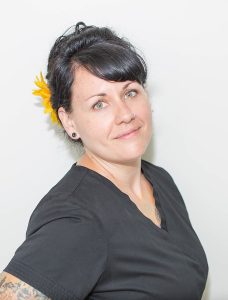
Sara has been a massage therapist for over 10 years.
The circular marks or “spots” left behind are sometimes confused with bruises (they’re not). Cupping spots are simply the result of blood vessel expansion during pressure change (simply put, they’re basically like a hickey).
“The practice is somewhere between 2,000-5,000 years old,“ said Sara. While cupping is often associated with Chinese medicine (and still widely practiced in many Asian cultures), traces of the practice range as far back as ancient Rome and Egypt. “There are hieroglyphics of Egyptians doing cupping,” she explained.
Types of Cupping Therapy

Today, there are two main categories of cupping: Wet and dry cupping.
Dry cupping simply involves suction, while wet cupping is often a combination of suction and medicinal bleeding. Of the two, dry cupping is the more predominant method used in the U.S. (with wet cupping actually outlawed in some states).
Traditional dry cupping, also known as fire cupping, is done with glass cups along with a flammable substance (alcohol, herbs, etc.) that is placed on a small tissue or cotton ball and set on fire beneath the cup momentarily. As the flame goes out, it creates a vacuum effect that suctions the cup to the skin.

Other modern forms of cupping are performed with plastic or silicone cups that utilize a pump to suction air and fasten the cups to the surface of the skin without flame.
“You tend to see fire cupping more in Chinese medicine and acupuncture. That’s more about energy flow and chi,” explained Sara, who is trained in both forms of dry cupping.
“The fire cupping has massive suction with it, because you’re taking all the oxygen out, so there’s a lot less control,” she said. “I’m trained in that too, but it’s not as fluid and quick as the contemporary cupping is. What I do is still going to open up energy flow, but I’m being more intentional about soft tissue [the muscles, tendons, ligaments], because that’s why people come to me, with an ache or pain.”
What are the Benefits of Cupping Therapy?
Common complaints Sara receives from clients are tight muscles, particularly in the back and shoulders. “Connective tissue is a huge culprit to pain, aches, lack of range of motion [and other] mobility issues,” said Sara.

Sara herself regularly undergoes cupping sessions by fellow CMTs.
Since its appearance in the 2016 Olympics, many athletes have sought out cupping as a tool for muscle recovery or fitness plateaus. “If you’ve got all these adhesions locking down on your muscles, then it’s not going to have any room to grow,” Sara explained.
Sara works with athletes on a regular basis. “Almost all of my clients that come regularly have hit [personal records] out there [in the gym] time and time again,” she said.
But those aren’t the only reasons people seek out cupping.
Sara works with clients for a wide range of complaints, including:
- Wrinkle and cellulite reduction
- Rheumatoid arthritis
- Chronic fasciitis
- Frozen shoulder syndrome
- Plantar fasciitis
- Scar healing and recovery
- Increasing range limited ranges of motion
“There are a ton of reasons you’d do cupping on someone,” Sarah explained. “I have clients that couldn’t stick their arm up [overhead] that can now get their arm up. I have some people who come to me strictly for their anxiety,” she said. “I also do a lot of scar recovery for people who have really bad scarring.”
Sara also seeks to help educate her clients on lifestyle factors that can influence their bodies. “People are really surprised when I let them know that the things they do in their daily life [affect] their quality of life.” Everything from long hours at a desk, bed pillows, sleeping positions, shoes or the way someone sits in a car can create soft tissue imbalances.”
Cupping Therapy Cost and Where to Find It
As cupping therapy is picking up popularity in recent years, it’s becoming more available on a local level. Some larger chain spas have added cupping to their list of available services along with individual massage therapists offering it in their personal practices.
Rates for cupping massages are often within the same range as pricing for traditional massage therapy, which can be around or over a dollar a minute per session.
My Cupping Massage Experience

My session was focused mainly on restoring mobility in areas where I had muscular tension from exercise and scoliosis. She also focused on my injured right ankle (where I had suffered a severe ankle injury a few weeks earlier) to help dissipate bruising and fluid retention and ease tightness in surrounding ligaments.
Sara began with traditional massage techniques, applying direct pressure kneading the muscles by hand to identify areas where my body was carrying knots or tension. She then took one of the cups and lightly suctioned it to my skin and began moving it briskly back and forth across the area to begin breaking up muscular adhesions beneath the surface.
It felt unusual as the cup moved around in this way, but not painful; it was a strangely interesting sensation as the skin beneath the cup was gently lifted then released as the cup glided around. At times it felt ticklish, like when she quickly ran it up and down my quads.
In areas with more muscular tension, the sensation was less comfortable and more intense. Not painful, but more like the tissue beneath was stiff and less inclined to be lifted and moved around (similar the discomfort when a knotted muscle is deeply massaged; sensitivity to the pressure being applied to a tight area followed by the relief afterward when some of that tension is released).
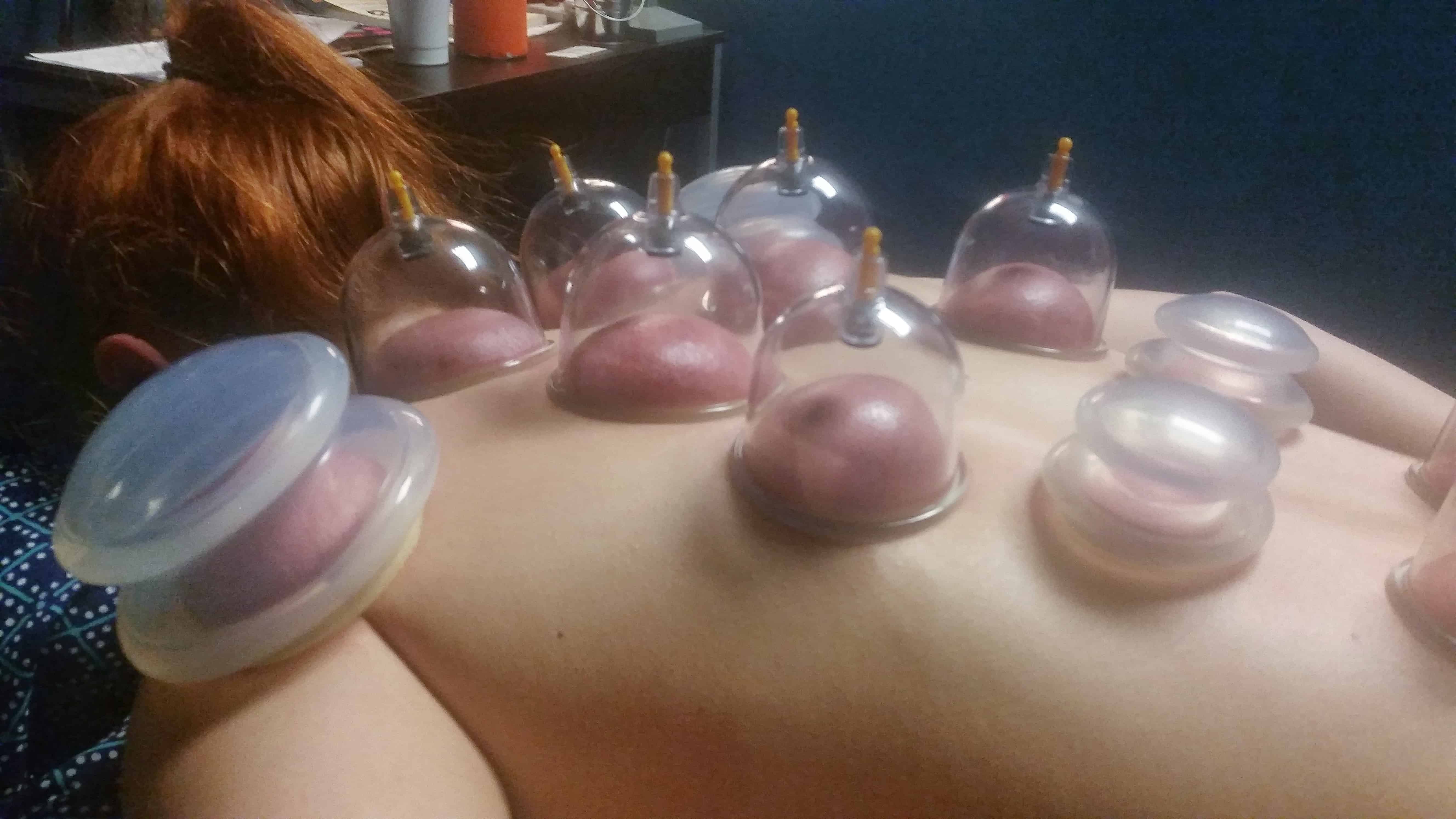
Also interestingly, in some areas, there were audible little crackling noises (like the faint “snap, crackle and pop” associated with Rice Krispies cereal) as the cup ran along sections of muscle particularly dense with adhesions, like my shoulders.
When she completed this process on the front half of my body, she had me turn over to focus on the back half. After repeating the steps of massage and fluid movement of a cup, she began setting cups on specific regions of my back and applied a deeper level of suction to fix them into place.
As she pumped the air out, I felt my skin lift up beneath the cup with a more intense pressure than when she was moving the cup back and forth. The sensation was quite intense as the cups first adhered the surface; it was not painful, but it also wasn’t particularly comfortable.
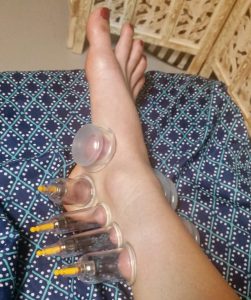
If I’m being totally transparent, it reminded me of the time my brothers and I got in trouble as children for playing with mom’s vacuum. We discovered that if you used the circular hand tool attachment on the vacuum and suctioned it to your arm, it would leave a round, red mark behind.
(As you can imagine, our mother was less than thrilled to realize her children were using her vacuum to leave giants spots that looked like bruises all over each other.)
But as each cup continued to sit in place, the feeling of pressure began to subside until it hardly felt like the cups were there at all. Sara continued placing cups until my back was almost completely covered in them and then allowed them to rest on my skin (probably somewhere around 8-10 minutes).
As unusual as the pictures appear, this was probably the most relaxing portion of the massage. As the pressure from the cups continued to dissipate, I felt quite serene on the table. At one point, I actually began to feel sleepy because my body was tranquil in my environment.
After a certain amount of time passed, Sara released the air from the cups, removing them one by one from my skin and I felt a gentle release of pressure as they came off. She then briefly massaged my back again and it felt wonderful as she rubbed the skin and muscles down one more time.
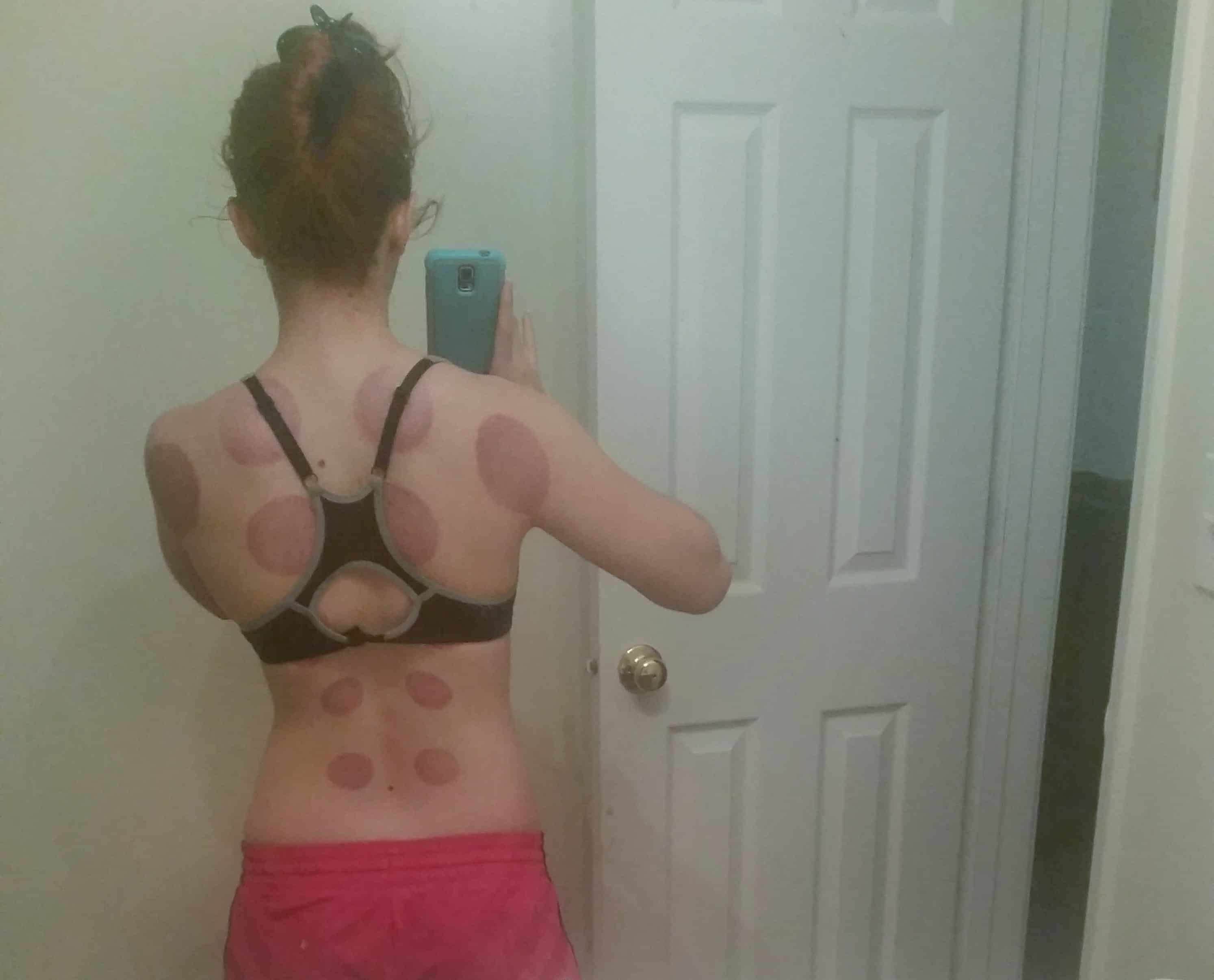
After my massage was over, I felt loose, relaxed and reenergized. She instructed me to take in plenty of water and to avoid heavy exercise or activity the rest of the day (because putting additional stress on my body would be counterproductive following our session relieving tension).
I left with some red circles of my own that day from where she allowed the cups to rest on my skin. They didn’t feel particularly sensitive or different from the rest of my skin; within a week they faded and disappeared entirely.
Final Conclusions
My experience with cupping therapy has been a positive one.
I do want to clarify that cupping isn’t a magical cure-all pill for ailments. Much like how performing one workout or eating one healthy meal won’t transform your health overnight, you can’t expect miracles from one cupping therapy session.
Since originally writing this post in 2016, I’ve become a fan of cupping therapy. In fact, both my husband and I have regularly incorporated cupping into our recovery routine on a monthly basis. I absolutely believe that when incorporated consistently, cupping therapy has had a positive impact in my recovery routine.
Related articles
- 7 Tools to Reduce Stress and Enhance Recovery
- I Tried Taking Collagen for a Month
- I Tried Drinking a Gallon of Water a Day
- How to Run (When You Suck at Running)
All writing copyright © 2017 Rachel Elise Weems Woods. All images of myself or cupping equipment are copyright © 2017 Rachel Elise Weems Woods with certain images of other clients shared with permission by Sara Komadina.
Leave a Reply