
We’ve all been there –that moment of evaluating our dinner plate and admitting it could use more green. For one reason or another, people recognize the importance fruits and vegetables in a balanced diet. The challenge lies in knowing how to find and incorporate that balance.
The CDC recommends the average adult consume about 2 cups of fruit and 3 cups of vegetables daily. Visually, that’s filling half of your plate with fruits and veggies at each meal.
One commonly practiced strategy for incorporating those servings is by eating a salad. But you can waste good intentions with poor ingredient choices when it comes to building a nutritive salad. Try making these five, simple modifications to ensure you’re salad is a success.
One of the keys to keeping them from getting boring is to layer in different textures and flavor with a variety of ingredients.
Ditch the Iceberg Lettuce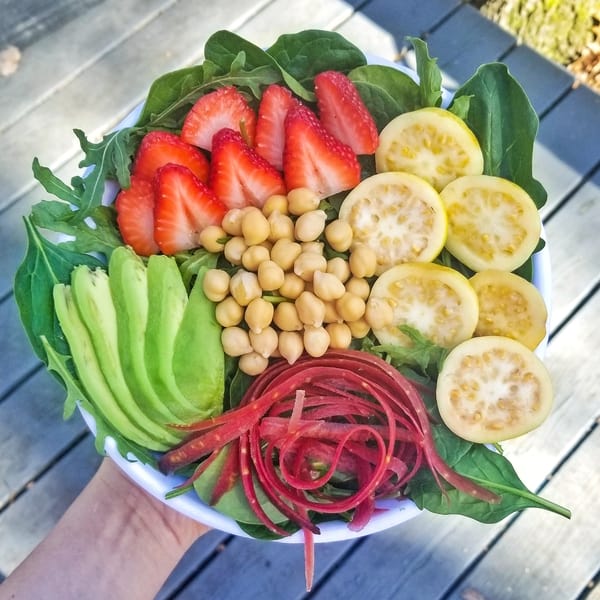
Iceberg lettuce has little to no real nutritional value to offer. It might as well just be a bowl of crunchy water.
You might be thinking “isn’t the point of eating a salad, to save calories?”
Not if you want to make a healthier salad. Low-calorie isn’t simply the end goal of a great salad. It’s 100% possible to create a great tasting, nutrient-dense salad that also happens to be a lower-calorie meal option.
Each element of the salad should have purpose. Especially the main leafy green component of a salad, since it’s such a big filler. Try swapping out the iceberg for one (or a mixture of several) of these more nutrient-rich options.
- Spinach
- Kale
- Arugula
- Romaine Lettuce
Ease up on the dressing
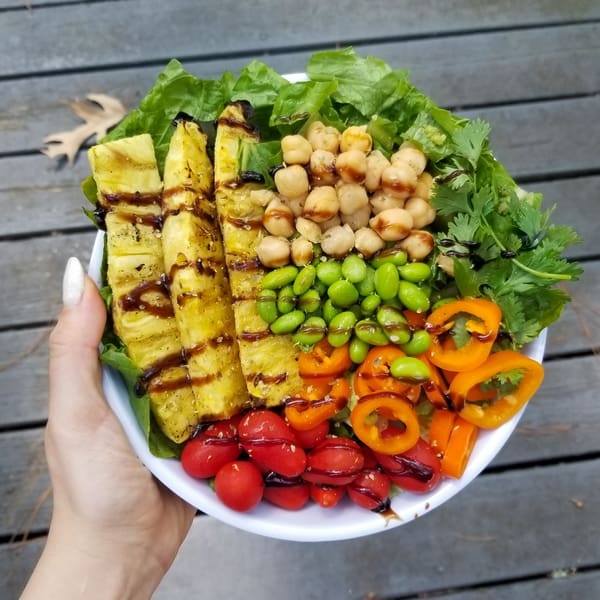
A pile of dressing can quickly overpowers a wholesome salad.
If you’re using a store-bought dressing, really pay attention to the nutrition label for the serving size. They often contain chemicals and preservatives to prolong shelf life, thickening starches, mayonnaise, food coloring, sodium, MSG and a lot of added sugar, fat and calories.
One serving of ranch dressing (2 Tablespoons) can contain up to 129 calories and 13 grams of fat per serving! And let’s be honest, how many people are measuring out that serving size when they add dressing to their salad? Not many.
One big drizzle of heavy dressing could easily add 200-400 calories to your meal. Someone eating salads with unmeasured dressing portions five times a week could be an extra 1000+ calories. If you’re counting calories with the goal of weight loss, that’s a ton of empty calories impeding your progress.
You can add extra flavor to salads by sprinkling on some of your favorite herbs and spices. You can opt to make lighter homemade vinaigrette to add good taste without the excess junk
Stronger cheese vs. more cheese

While cheese brings a positive source of calcium and protein to a meal, don’t overdo it.
By the ounce, cheese is as calorically dense as butter and also high in fat.
Aim for stronger cheeses, like a sharp cheddar, fresh parmesan, feta or blue cheese and make sure you’re paying attention to portion sizes. You’ll get the same flavor for a fraction of the fat and calories.
Don’t skimp on protein

Your body is largely made up of protein –it fuels your cells, tissues, and organs.
There are three big weight loss and appetite management perks protein to salads.
1. During digestion, your body actually expends more energy (aka burns more calories) while breaking down protein. This increased caloric expenditure is fabulous for supporting weight loss and metabolism health.
2. Protein also helps support muscle growth and recovery. And if some of your health goals include weight or fat loss, you want to increase overall muscle mass in your body. Muscle mass is more calorically efficient than fat, meaning the more muscle mass an individual has, the more calories their metabolism will burn at rest throughout the day.
3. Protein helps keep you full longer. This can help you stay satisfied longer and banish those pesky cravings between meals.
If you eat meat, avoid fried or fatty meats. Instead, aim for lean meats, like grilled chicken breast.
Not a meat-eater? Not a problem! There are many sources of protein out there for vegetarians (fish, eggs, etc.) and vegans (nuts, beans, legumes, etc.). Add variety by trying different things!
Max out on veggies
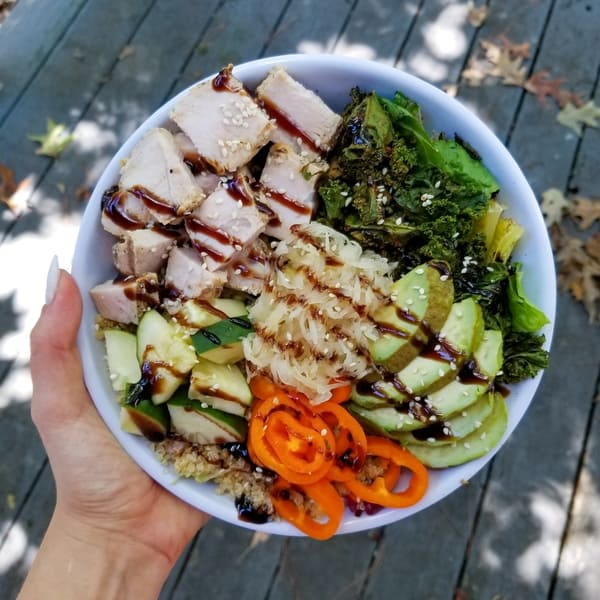
That would be the point of a salad after all: the greens!
A few leaves of lettuce and shreds of carrot do not a healthy salad make. There is a world full of fruits and vegetables out there with different flavors and nutritional values. If you don’t like one, try another. They add nutrients and substance to fill you up and keep meals from getting monotonous.
If you want to improve the quality of your diet, just remember –what you put into it is what you will get out of it.
You can never cheat or shortcut your way to better health, and you won’t stick with anything you don’t enjoy. So invest a little time to build a salad that you will actually want to eat and it will always be worth the effort.
Related Salad Posts:
Related Healthy Recipes Posts:
- Apple Pie Protein Smoothie
- Pina Colada Protein Smoothie
- Orange Creamsicle Protein Smoothie
- The Incredible Green Protein Smoothie
- Chocolate Covered Strawberries Protein Smoothie
- 3 Healthy Protein Smoothies for Fall
- 3 Healthy Holiday Protein Smoothies
All writing and images copyright ©2020 Rachel Elise Weems Woods
Originally published 2013. Updated 10-28-2020.
Leave a Reply